



Auckland Port congestion
Maersk in its monthly market update for July sighted Auckland Port congestion as a major hurdle for smooth functioning of the supply chain in New Zealand. It read Export demand from Australia and New Zealand remains strong, impacting space and causing coastal bottlenecks.
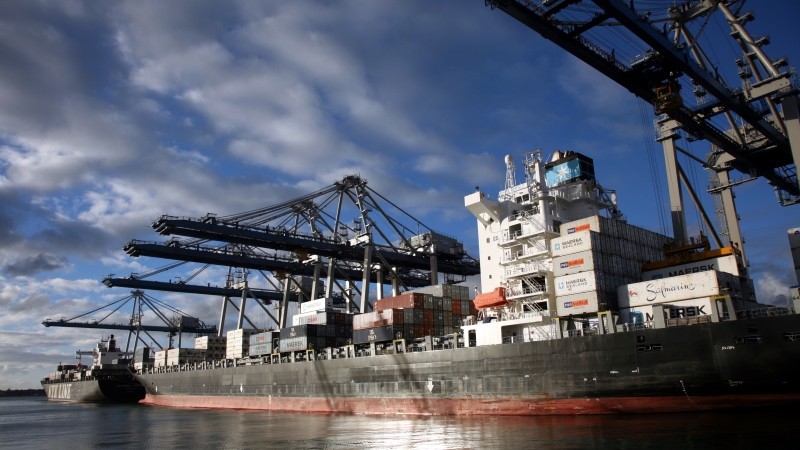
The congestion has caused unprecedented operational disruptions. According to the Maritime Union of New Zealand, shipping reliability was at a healthy average of over 70% in August last year across the ports of the nation but with pandemic playing in, it plummeted consistently to an all-time low of 6%.
At the port of Auckland, the country's main gateway for sea freight, the reliability was at 9.57% in November which further fell to 5.56% in April. The congestion also hurts compliance with schedules at other foreign ports for shipping lines. According to Maersk, it has faced up to nine days delays at Sydney port due to the lack of berthing spaces in Auckland.
The major reasons being cited by many port authorities for the congestion are delays in Singapore and industrial actions in Australia. Another important reason possibly causing the delays is the skipping of ports by vessels for more lucrative routes between Asia and North America where freight rates are sky-high.
Maersk has also announced in the report putting in place a revised policy in the interest of clearing port congestion in Auckland. It said that the Danish carrier will concentrate all major services at Tauranga port, from where the freight will be transported to METROPORT Auckland using rail.
A similar strategy was implemented in late January where Auckland port was avoided by Maersk vessels for 11-weeks straight. Port officials at Tauranga believed that up to a twelve-day delay was avoided at Auckland port with this strategy.
Shipping giants like Maersk also expect the government to play a larger role in bringing an end to the congestion at the Auckland port.
Source: Container News
Related News

10/06
2026
The update of the Wan Hai Bunker Surcharge (WBS) for Q3/2026 by Wan Hai Lines (WHL) aims to proactively manage operational costs amidst the continuous fluctuations in global oil prices, while complying with stringent clean fuel standards in international maritime transport. This periodic adjustment helps ensure the maintenance of service quality and the stability of shipping routes departing from key southern port clusters (Ho Chi Minh City, Dong Nai, Ba Ria - Vung Tau) to global markets.

05/05
2026
The revised surcharge will take effect from June 1, 2026 (based on gate-in date) and will remain applicable until further notice.

25/03
2026
The global aviation industry is facing a new wave of disruption as ongoing tensions in the Middle East continue to put pressure on jet fuel costs, flight operations, and the overall stability of international air networks. The impact is no longer limited to routes passing directly through conflict-affected areas. Instead, it is now spreading across multiple markets, driving higher airfares while also increasing the risk of flight delays and cancellations on a broader scale.