



Cyclone Mocha forces 60-hour operation closure at Chittagong port
The operations at the Chittagong port, Bangladesh’s prime seaport, had remained suspended over two days as the super cyclone Mocha approached and crossed the country on Sunday, 15 May.
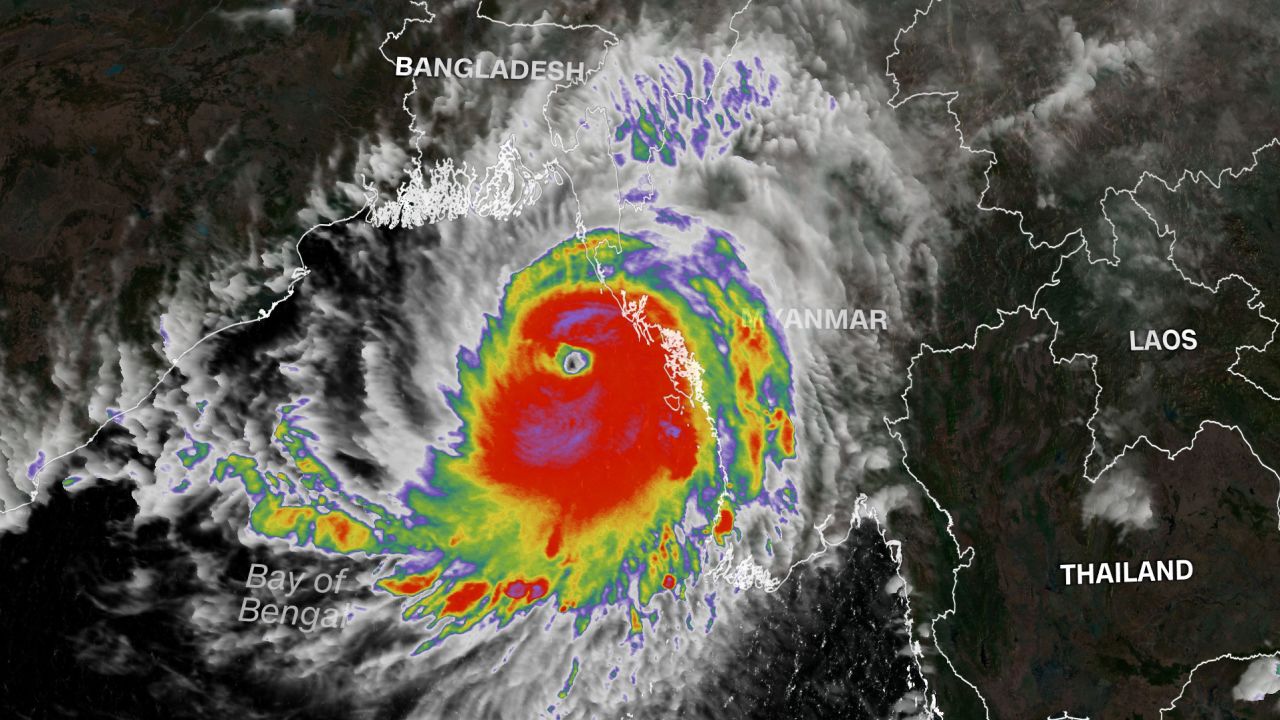
The port authority had declared suspension of works on Friday night after Bangladesh Met office issued danger signal-8 for Chittagong Port, great danger signal 10 for Cox’s Bazar port, great danger signal-8 for Payra port and danger signal-4 for Mongla port.
The operation at Mongla seaport also remained suspended due to the cyclonic storm.
On Friday night the Chittagong Port Authority sent all the ships from its jetties to the outer anchorage while the lightering vessels were also sent to the safer places fearing any collision.
There were 18 vessels at the port jetties, which unloading and loading containers and cargoes, when the port authority declared operation suspension, according to port officials.
The cranes and other equipment were packed and put in safe places to avoid any possible incidents from the fierce wind of the super cyclone that was heading towards Bangladesh's coast with over 200 kilometres of wind speed.
The activities at the port yards were also suspended on Friday night thus delivery of containers and cargoes was halted immediately.
The Met office withdrew danger signal for Bangladesh’s sea and river ports on Sunday night after cyclone Mocha left towards the Myanmar coast, severely lashing homes and establishments in Cox’s Bazar and St Martin’s Island.
The Chittagong Port Authority then announced operation resumption at the yard and started delivering containers and cargoes immediately.
However, container handling at the jetties could be resumed on Monday morning after bringing 17 ships back from the outer anchorage with the help of high tide, with Chittagong being a tidal port, 60 hours after the operation suspension.
One vessel left the port area just after declaration of work suspension, leaving some boxes at the jetty designated for it, to avoid two days of possible delay, according to port officials.
Many vessels could not reach Bangladesh waters during a couple of days due to the cyclonic storm or they slowed down their voyage and stayed away.
On Monday, eight container vessels were handling boxes at port jetties while another four boxships were staying at the outer anchorage. There were 44,018 TEU containers lying at the Chittagong port yards on the day against its total storing capacity of 53,518 TEUs.
Source: Container News
Related News

10/06
2026
The update of the Wan Hai Bunker Surcharge (WBS) for Q3/2026 by Wan Hai Lines (WHL) aims to proactively manage operational costs amidst the continuous fluctuations in global oil prices, while complying with stringent clean fuel standards in international maritime transport. This periodic adjustment helps ensure the maintenance of service quality and the stability of shipping routes departing from key southern port clusters (Ho Chi Minh City, Dong Nai, Ba Ria - Vung Tau) to global markets.

05/05
2026
The revised surcharge will take effect from June 1, 2026 (based on gate-in date) and will remain applicable until further notice.

25/03
2026
The global aviation industry is facing a new wave of disruption as ongoing tensions in the Middle East continue to put pressure on jet fuel costs, flight operations, and the overall stability of international air networks. The impact is no longer limited to routes passing directly through conflict-affected areas. Instead, it is now spreading across multiple markets, driving higher airfares while also increasing the risk of flight delays and cancellations on a broader scale.