



Georgia Ports receives green light for new rail hub in Gainesville
Georgia Ports Authority (GPA) executive director Griff Lynch confirmed that GPA’s Network Georgia plans to develop rail hubs around the state is gaining momentum, with federal environmental approval for an inland terminal near Gainesville.
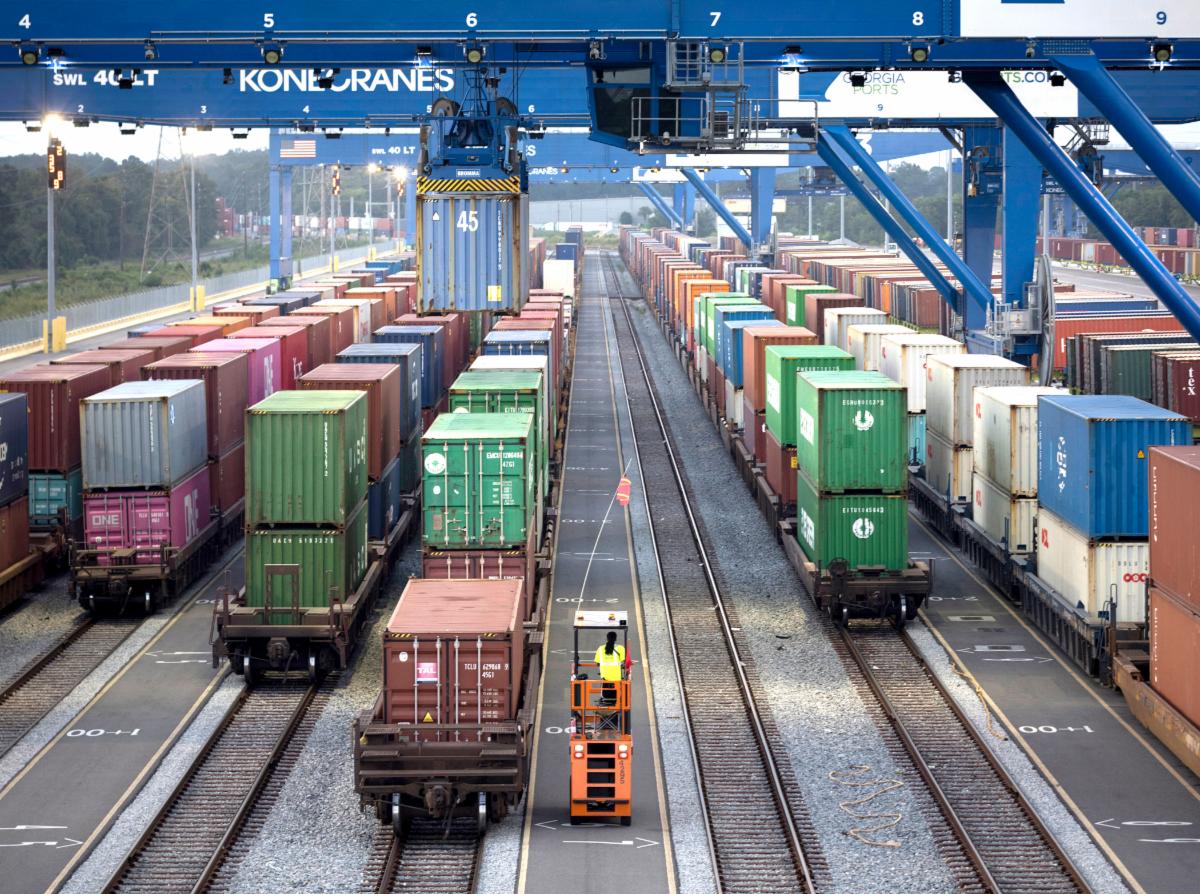
GPA will now finalise a grant agreement with United States Maritime Administration (MARAD), an agency of the US Department of Transportation, before beginning construction.
MARAD has awarded GPA a grant of up to US$46 million for the construction of a new inland container port along the I-85/I-985 corridor.
Earthwork is set to begin in July, with the terminal building starting in January 2024 and ending in July 2026.
Georgia Ports expects the inland rail hub to open with 60,000 containers per year. With a roundtrip truck route of 602 miles, the terminal's starting volume would save nearly 36 million truck miles on Georgia highways in its first year of operation, according to a statement.
Meanwhile, last month the Georgia Ports Authority had its third busiest April ever, with 408,686 TEUs of containers, behind April 2022 (495,782 TEUs) and April 2021 (466,633 TEUs). Last month's volume was a 12% rise over the port's pre-pandemic performance in April 2019, when Garden City Terminal carried 364,481 TEUs.
Source: Container News
Related News

10/06
2026
The update of the Wan Hai Bunker Surcharge (WBS) for Q3/2026 by Wan Hai Lines (WHL) aims to proactively manage operational costs amidst the continuous fluctuations in global oil prices, while complying with stringent clean fuel standards in international maritime transport. This periodic adjustment helps ensure the maintenance of service quality and the stability of shipping routes departing from key southern port clusters (Ho Chi Minh City, Dong Nai, Ba Ria - Vung Tau) to global markets.

05/05
2026
The revised surcharge will take effect from June 1, 2026 (based on gate-in date) and will remain applicable until further notice.

25/03
2026
The global aviation industry is facing a new wave of disruption as ongoing tensions in the Middle East continue to put pressure on jet fuel costs, flight operations, and the overall stability of international air networks. The impact is no longer limited to routes passing directly through conflict-affected areas. Instead, it is now spreading across multiple markets, driving higher airfares while also increasing the risk of flight delays and cancellations on a broader scale.