



Ports of Auckland restarts its automation project
Ports of Auckland (POAL) has announced a new plan to reset and complete its automation project, after its pause due to an incident in June that revealed a potential safety risk.
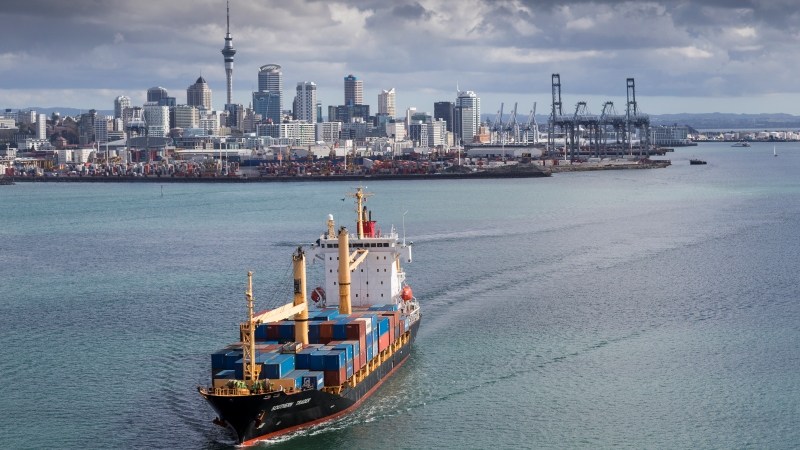
As the safety risk has now been fixed, POAL is ready to restart with a revised project that will be implemented in four stages, with the first to start shortly.
Each stage has milestones based on safety, reliability, productivity, and operational readiness, that must be met before the project can progress to the next stage.
Particularly, the four stages are the following: Systems acceptance testing, Automation of part of Fergusson Terminal North Berth, Automation of all of Fergusson Terminal North Berth and Full automation of Fergusson Container Terminal (go-live).
Unlike other, larger ports, Auckland lacks space to build a new automated terminal off-line, and then turn it on when complete. "We are having to automate our terminal while still operating, making it a more complex project," said the port authority.
Despite the difficulties due to the pandemic, the project has successfully handled over 100 ships, but the speed and reliability of the system have space to further be improved.
Particularly, a safety review also found that the safety assurance framework for the project needed more work. The port stated that "we have done a great deal of work on safety assurance and this is ongoing. We are now able to bring in overseas experts from the vendor to help complete the project."
Although a review found it is realistic for the project to be completed by late March 2022, this timing could impact existing import volume demand and the peak export season and cause further supply chain disruption.
For this reason, the port in New Zealand announced it will not give a "go-live date" at the moment.
Source: Container News
Related News

10/06
2026
The update of the Wan Hai Bunker Surcharge (WBS) for Q3/2026 by Wan Hai Lines (WHL) aims to proactively manage operational costs amidst the continuous fluctuations in global oil prices, while complying with stringent clean fuel standards in international maritime transport. This periodic adjustment helps ensure the maintenance of service quality and the stability of shipping routes departing from key southern port clusters (Ho Chi Minh City, Dong Nai, Ba Ria - Vung Tau) to global markets.

05/05
2026
The revised surcharge will take effect from June 1, 2026 (based on gate-in date) and will remain applicable until further notice.

25/03
2026
The global aviation industry is facing a new wave of disruption as ongoing tensions in the Middle East continue to put pressure on jet fuel costs, flight operations, and the overall stability of international air networks. The impact is no longer limited to routes passing directly through conflict-affected areas. Instead, it is now spreading across multiple markets, driving higher airfares while also increasing the risk of flight delays and cancellations on a broader scale.