


Shifting economic demand could be positive for supply chains, long-run
Maersk has warned that the energy crisis in China and the consequent delays and congestion caused by Covid-19 is disrupting services, but some believe the power problems may lead to falling demand following the rush to get goods to market for Christmas.
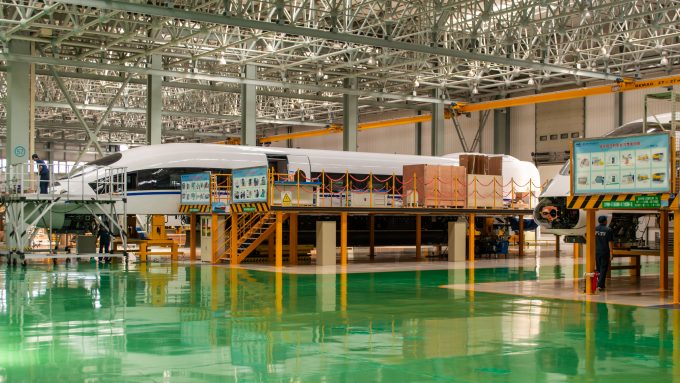
Chinese New Year is often seen as the period when demand tails off, but with rising energy prices in China – coal has already doubled in price and a further 20% increase is expected – a Maersk advisory suggests factory output could be hit before the holiday.
Maersk said: “Rationing measures have limited many factories to fewer days of production. As China enters the winter season, where the general need for electricity increases, it is expected that the coal and power supply crunch will continue. The level of disruption to manufacturing will in part depend on the severity of the winter and the corresponding need for electricity for heating purposes.”
With current restrictions affecting 20 out of 31 provinces and a tough winter looming, production in China will struggle to maintain levels seen previously.
“We could see the market taking a bit of a breather, it could be that the traditional dip in demand after Chinese New Year could come early,” said James Hookham, of the Global Shippers’ Forum (GSF).
And Maersk warned: “While consumer needs are expected to be high during the end-of-year holiday shopping season, supply lines are impacted by rising raw material costs, port delays and shortage of shipping containers.”
The carrier advises shippers to monitor supply chains closely so mitigating actions can be taken, to remain in contact with vendors and, if necessary, to contact the carrier to discuss any actions that can help with delays.
Recently shippers, however, have complained that contacting shipping lines had become virtually impossible since the outbreak of the pandemic, with lines not answering phones or responding to emails.
With China experiencing production issues and effects of the trade dispute under the previous US administration, it has led many businesses to relocate to other Asian countries, such as Vietnam and Indonesia, which could offset, at least to some extent, any decline in demand from China, according to Mr Hookham.
He thinks Chinese New Year will be “the landmark point which will show the industry which way freight rates will go in 2022”, and added: “My guess is that they will stay high, as the changes in the supply chain are a structural shift, not something more transient.
“We’ll see how the market behaves when there is a change in demand, and that will show regulators how responsive the market is to change,” he said.
Perhaps more pertinently, Mr Hookham pointed out that China was purchasing as much coal as possible and securing gas to maintain output – “energy all coming from fossil fuels”.
According to Mr Hookham, the narrative from manufacturers and major corporates is changing as pressure on prices grows, with companies initially expecting to soak up major price hikes in supply chains. But a US markets specialist has analysed the annual reports of major US corporations, including Ford, Amazon, McDonald’s and Microsoft, and they are saying they are confident they will be able to pass price increases on to consumers.
Those market pressures include increased wage bills, higher production costs and supply chain increases, and while initially these companies believed they could soak these higher costs up, that is looking less likely.
Source: The LoadStar
Related News

10/06
2026
The update of the Wan Hai Bunker Surcharge (WBS) for Q3/2026 by Wan Hai Lines (WHL) aims to proactively manage operational costs amidst the continuous fluctuations in global oil prices, while complying with stringent clean fuel standards in international maritime transport. This periodic adjustment helps ensure the maintenance of service quality and the stability of shipping routes departing from key southern port clusters (Ho Chi Minh City, Dong Nai, Ba Ria - Vung Tau) to global markets.

05/05
2026
The revised surcharge will take effect from June 1, 2026 (based on gate-in date) and will remain applicable until further notice.

25/03
2026
The global aviation industry is facing a new wave of disruption as ongoing tensions in the Middle East continue to put pressure on jet fuel costs, flight operations, and the overall stability of international air networks. The impact is no longer limited to routes passing directly through conflict-affected areas. Instead, it is now spreading across multiple markets, driving higher airfares while also increasing the risk of flight delays and cancellations on a broader scale.