



Typical Q4 spike in box volumes yet to be seen in Oakland
The port of Oakland's September container volume remained relatively steady compared with August box throughput reaching 134,186 TEUs, marking a slight 1.2% increase over the same month in 2022.
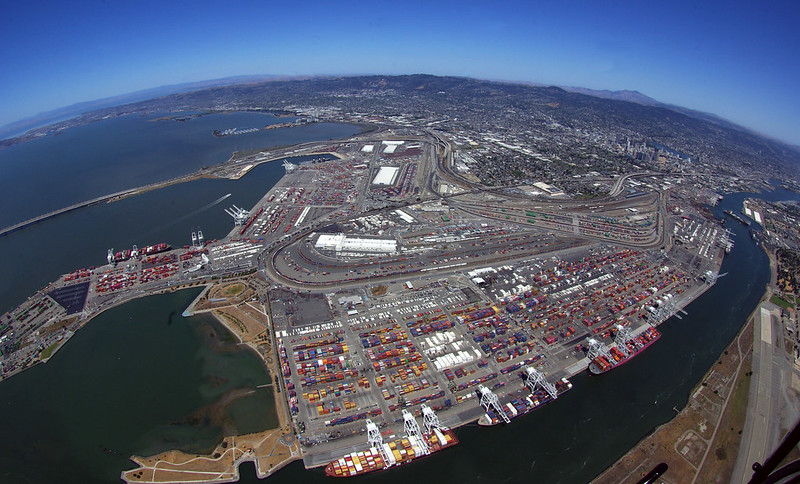
September's full exports jumped 9.1% year-on-year to 59,757 TEUs, but full imports inched down 4.3% to 74,428 TEUs. For the same month, Oakland's empty imports dropped by 22.8% year-on-year to 11,208 TEUs and empty exports shrank by 29.8% to 26,429 TEUs.
"Shipping volumes have declined globally," said the Californian port in a statement. "In response, shipping rates have declined to very low levels and ocean carriers have begun to alter their schedules, canceling some trans-Pacific vessel sailings."
However, vessel calls at the port of Oakland continue to increase in 2023, with 744 calls, rising 17% over 2022.
"The Port of Oakland's current container volume is consistent with the leveling off of global container traffic,” pointed out maritime director of Port of Oakland, Bryan Brandes, who went on to add that "vessel calls to the Port have increased this year, pointing to a slow and steady recovery from the turmoil of the past couple of years."
Although container volumes typically spike in the fourth quarter in preparation for the holiday season, the port of Oakland said it has not seen a noticeable increase yet.
"This may be attributable to a combination of high inventory levels, retailers ordering more goods from factories in Mexico and Canada rather than Asia, and/or consumer demand slowing in the Port of Oakland’s main market--Northern California," explains the US port.
Source: Container News
Related News

10/06
2026
The update of the Wan Hai Bunker Surcharge (WBS) for Q3/2026 by Wan Hai Lines (WHL) aims to proactively manage operational costs amidst the continuous fluctuations in global oil prices, while complying with stringent clean fuel standards in international maritime transport. This periodic adjustment helps ensure the maintenance of service quality and the stability of shipping routes departing from key southern port clusters (Ho Chi Minh City, Dong Nai, Ba Ria - Vung Tau) to global markets.

05/05
2026
The revised surcharge will take effect from June 1, 2026 (based on gate-in date) and will remain applicable until further notice.

25/03
2026
The global aviation industry is facing a new wave of disruption as ongoing tensions in the Middle East continue to put pressure on jet fuel costs, flight operations, and the overall stability of international air networks. The impact is no longer limited to routes passing directly through conflict-affected areas. Instead, it is now spreading across multiple markets, driving higher airfares while also increasing the risk of flight delays and cancellations on a broader scale.