



Virginia port’s upward trend in box volumes continues
Port of Virginia has exceeded for the second consecutive month the 300,000TEU mark, while after the 307,000TEU record in August, it handled more than 306,210TEU in September, representing an increase of 19% over the same month of the previous year.
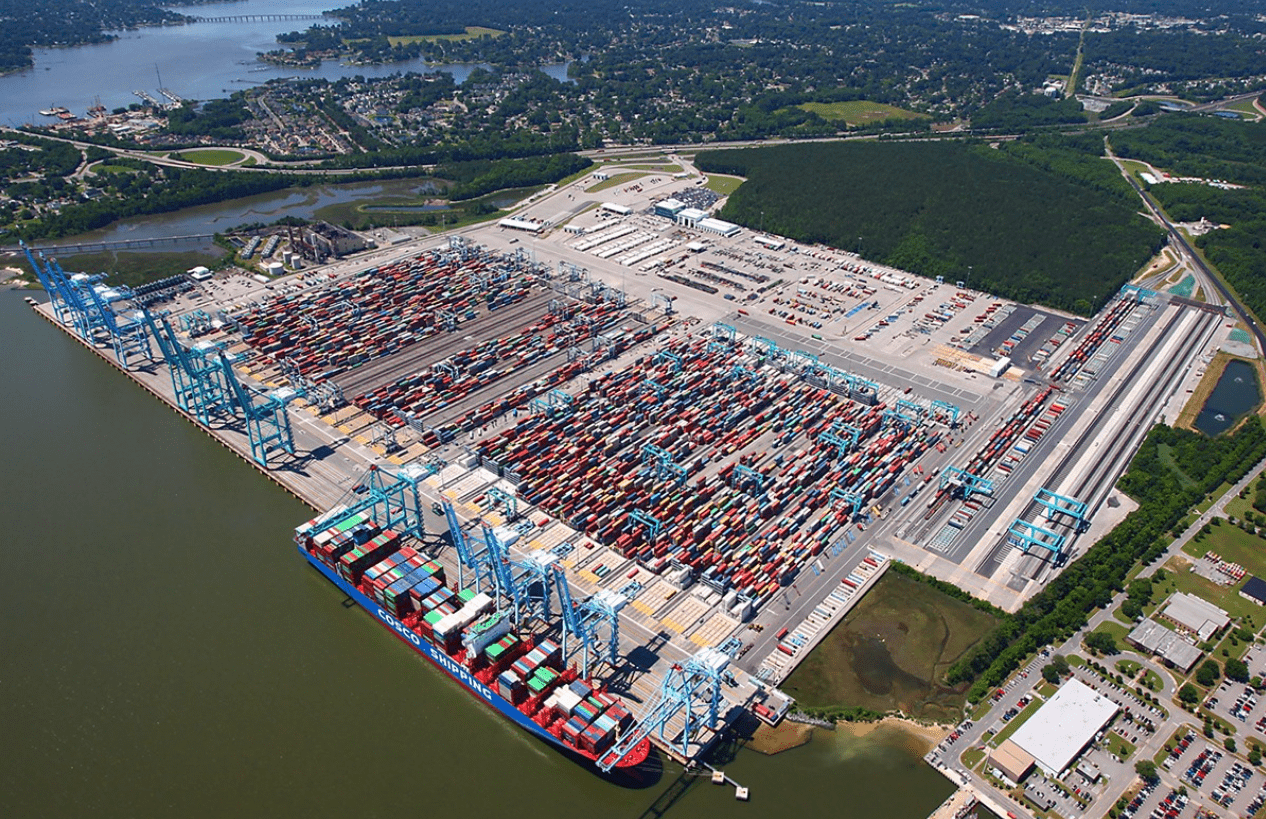
Loaded imports were the main factor of this volume uptrend, completing 152,197TEU and an increase of 26% compared to last September, the month when the port began seeing a considerable rebound in its volumes from the Covid period. In the meantime, exports also grew by almost 7%, surpassing 80,690TEU.
"Last September is when volumes began coming back and since then we have posted growth each month" highlighted the CEO and executive director of the Virginia Port Authority, Stephen A. Edwards, who went on to note that "the growth is not artificial and the movement of loaded and empty containers is up for both exports and imports."
Furthermore, Edwards attributed this container traffic growth to smooth port operations. "There is no congestion here and ocean carriers and cargo owners are taking notice of our track record and what we are doing to ensure consistency in our operation," he said.
Additionally, the port in the US East Coast moved 53,405 rail containers, 110,452 boxes via trucks, and 7,141 boxes through barges, representing a year on year increase of 21.6%, 25.2% and 9.4%, respectively.
From January until September, the seventh-busiest port in the country has handled 2.58 million TEU, which represents a 30% growth over the corresponding period of 2020.
Edwards is not expecting a slowdown in volumes before the year’s end. "We may see a dip as the retail season comes to its end, but this is normal and any fall-off in volumes will be small. Looking into 2022, we see nothing that leads us to believe that there is going to be a drop in volumes," he commented.
Source: Container News
Related News

10/06
2026
The update of the Wan Hai Bunker Surcharge (WBS) for Q3/2026 by Wan Hai Lines (WHL) aims to proactively manage operational costs amidst the continuous fluctuations in global oil prices, while complying with stringent clean fuel standards in international maritime transport. This periodic adjustment helps ensure the maintenance of service quality and the stability of shipping routes departing from key southern port clusters (Ho Chi Minh City, Dong Nai, Ba Ria - Vung Tau) to global markets.

05/05
2026
The revised surcharge will take effect from June 1, 2026 (based on gate-in date) and will remain applicable until further notice.

25/03
2026
The global aviation industry is facing a new wave of disruption as ongoing tensions in the Middle East continue to put pressure on jet fuel costs, flight operations, and the overall stability of international air networks. The impact is no longer limited to routes passing directly through conflict-affected areas. Instead, it is now spreading across multiple markets, driving higher airfares while also increasing the risk of flight delays and cancellations on a broader scale.