



Yard density and container delays force Antwerp terminal to set cargo opening rule
Port of Antwerp's MSC PSA European Terminal (MPET) has decided to implement a Yard Opening Time (YOT) scheme for all containers delivered at Q1718 and Q1742.
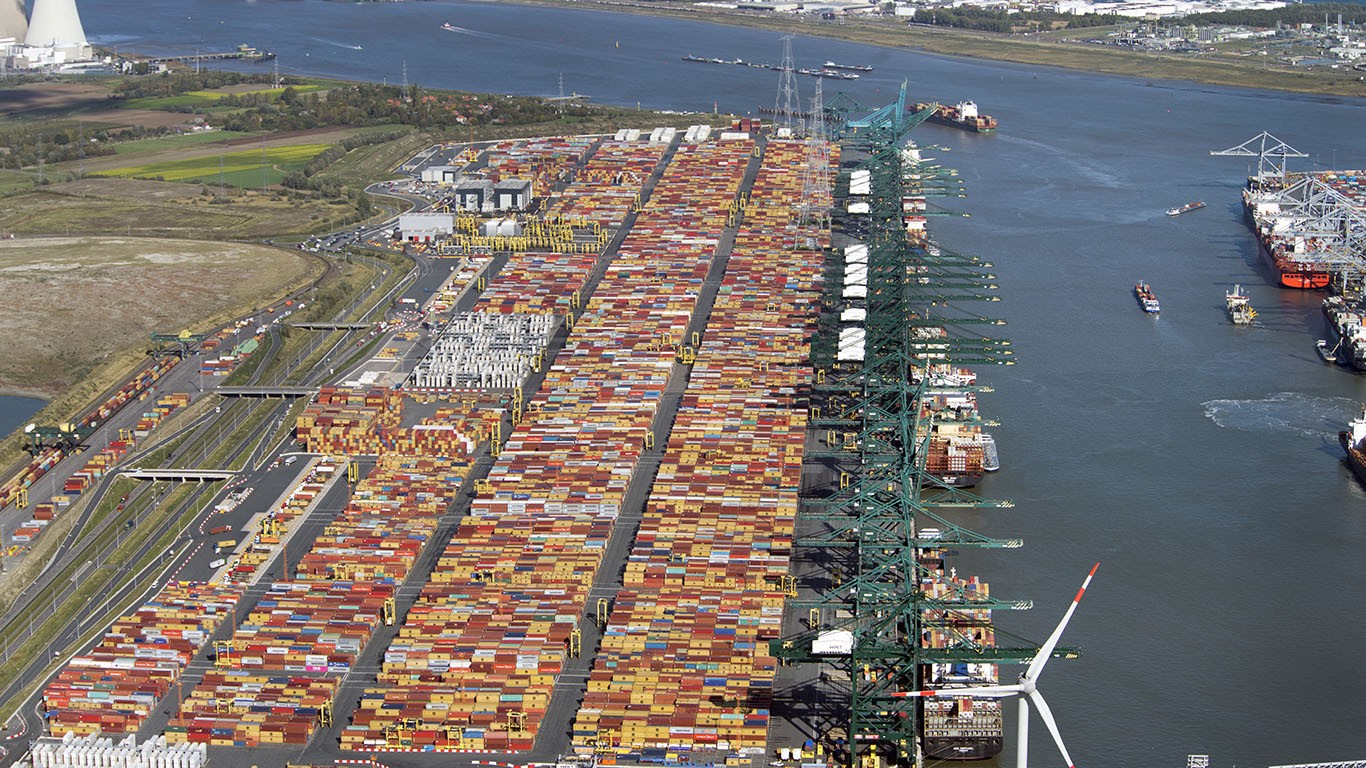
With this action, the Belgian container terminal aims to avoid an operational stand still and maintain an efficient and reliable service, as the yard occupancy and container dwell times at the MPET remain at critical levels despite all measures that have been taken so far, according to Hapag-Lloyd's announcement.
The decision of the YOT scheme introduction has been taken in line with the example set by other box terminals in the port of Antwerp where this measure has been implemented over the past few months.
With the above situation, MPET has been forced to implement a “7-day cargo opening rule” for export containers for all deep-sea liner services.
In practice, this Yard Opening Time (YOT) starts seven calendar days before the Estimated Time of Arrival (ETA) of the deep-sea vessel. This means that export containers can only enter the terminals seven days before the ship's confirmed arrival time, which is the earliest time in which an export container can be delivered.
This rule will be effective from Wednesday, 4 August 2021, while MPET will be updating the cargo opening times daily at 16:00 (GMT+2) on their website.
The earliest receiving date will be published ten calendar days prior to the vessel’s confirmed ETA.
Additionally, Truck Appointment Reference (TAR) codes can be created but truckers will get a NOK (not ok) status until the yard is opened for the intended vessel.
Container News
Related News

10/06
2026
The update of the Wan Hai Bunker Surcharge (WBS) for Q3/2026 by Wan Hai Lines (WHL) aims to proactively manage operational costs amidst the continuous fluctuations in global oil prices, while complying with stringent clean fuel standards in international maritime transport. This periodic adjustment helps ensure the maintenance of service quality and the stability of shipping routes departing from key southern port clusters (Ho Chi Minh City, Dong Nai, Ba Ria - Vung Tau) to global markets.

05/05
2026
The revised surcharge will take effect from June 1, 2026 (based on gate-in date) and will remain applicable until further notice.

25/03
2026
The global aviation industry is facing a new wave of disruption as ongoing tensions in the Middle East continue to put pressure on jet fuel costs, flight operations, and the overall stability of international air networks. The impact is no longer limited to routes passing directly through conflict-affected areas. Instead, it is now spreading across multiple markets, driving higher airfares while also increasing the risk of flight delays and cancellations on a broader scale.