



Airfreight rates out of China rise as new Covid restrictions impact airports
Airfreight rates ex-China are soaring after Covid cases prompted the closure of Nanjing Airport.
Authorities are blaming “lax” procedures at the airport and, with another Covid case connected to a cargo worker at Shanghai Pudong, forwarders fear new crew restrictions could reduce available airfreight capacity.
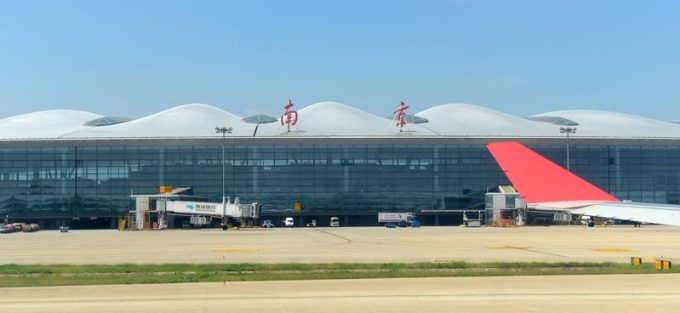
Located 300km north of Shanghai, in Jiangsu province, Nanjing isn’t yet under “full” lockdown, but one Chinese forwarder said inter-province travel rules had already caused some disruption to logistics.
He told The Loadstar: “Anyone from Nanjing, or passing Nanjing, needs to show a green healthy [QR] code when travelling to other cities. This would certainly affect inland trucking, as no driver wants to go to Nanjing and then be restricted from going into other cities.”
Furthermore, with the Nanjing Covid cases spreading to other cities, including Shanghai, he said a new 14-day isolation requirement on overseas crew would likely cause a pilot shortage for many airlines.
“A lot of airlines have had to cancel almost half of their [passenger] flights for the time being, and this has cut down cargo capacity significantly. Consequently, we see all airlines generally increasing airfreight rates a lot from this week,” said the forwarder.
Indeed, according to Taipei-based Team Global Logistics, this week’s rates from Shanghai to Los Angeles, Chicago and New York have reached $9.60, $11 and $12 per kg, respectively.
“And airlines will increase the airfreight [rates] little by little to prepare for the shipping peak season of Halloween, Thanksgiving and Christmas,” the forwarder added.
Scola Chen, team leader at Airsupply Logistics, said Shanghai Pudong was operating normally for cargo, despite strengthened prevention measures following the recent Covid case. However, he said, airfreight rates to the US would keep increasing because of “unprecedented” surge in cargo demand to Chicago O’Hare airport, where there is heavy congestion.
Cathay Pacific told customers last week its O’Hare warehouse was severely congested due to high demand and a shortage of labour, “due to Covid impacts”. The airline said it was suspending carrying some cargo types until 16 August to alleviate the backlog.
Source: The Loadstar
Related News

10/06
2026
The update of the Wan Hai Bunker Surcharge (WBS) for Q3/2026 by Wan Hai Lines (WHL) aims to proactively manage operational costs amidst the continuous fluctuations in global oil prices, while complying with stringent clean fuel standards in international maritime transport. This periodic adjustment helps ensure the maintenance of service quality and the stability of shipping routes departing from key southern port clusters (Ho Chi Minh City, Dong Nai, Ba Ria - Vung Tau) to global markets.

05/05
2026
The revised surcharge will take effect from June 1, 2026 (based on gate-in date) and will remain applicable until further notice.

25/03
2026
The global aviation industry is facing a new wave of disruption as ongoing tensions in the Middle East continue to put pressure on jet fuel costs, flight operations, and the overall stability of international air networks. The impact is no longer limited to routes passing directly through conflict-affected areas. Instead, it is now spreading across multiple markets, driving higher airfares while also increasing the risk of flight delays and cancellations on a broader scale.