



Ningbo port remains open but land transportation becomes tricky
Ningbo-Zhoushan, China’s second busiest container port is still open for business as the country battles another wave of Covid-19 infections, but the drive to keep out the disease has slowed trucking logistics.
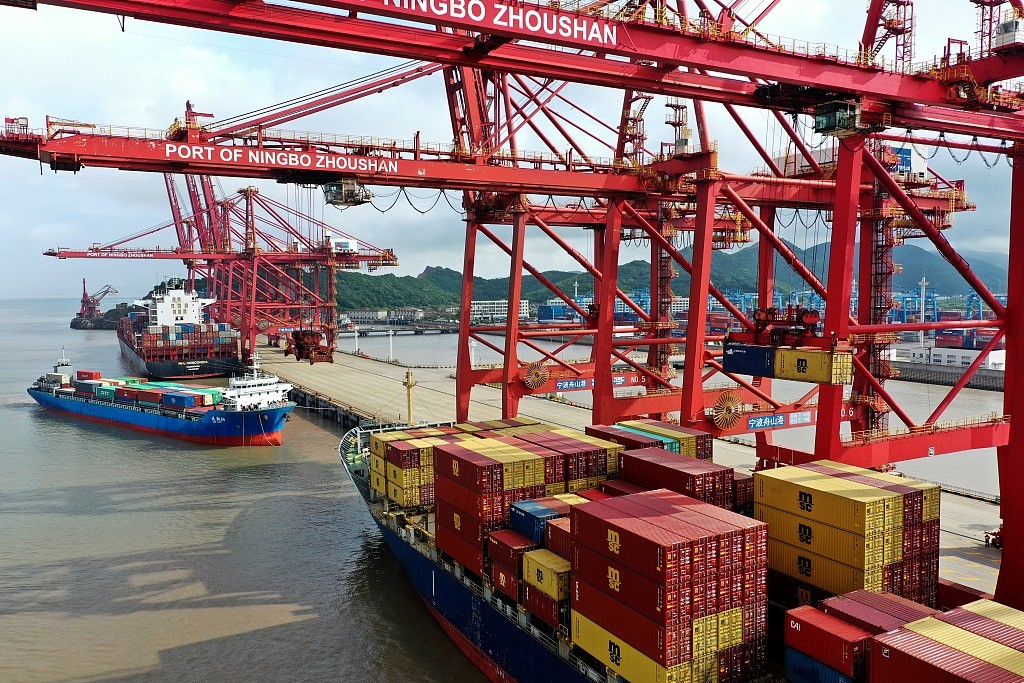
Bunkering sources told Container News that, “Only Zhenhai and Beilun (districts in Ningbo) have been locked down. The port itself is still functioning, but people working in the port or going to the port must produce a negative Covid-19 test result so that is slowing things down.”
Trucking service in Jinhua Yongkang, the mid-high-risk area of Beilun and the area outside Zhejiang province, where Ningbo is, has been suspended.
Trucking service providers are actively applying for the relevant certificates for vehicles and drivers in accordance with Covid-19 prevention policies.
Global Times, a Chinese state-run newspaper, said Ningbo’s average daily container handling has shown no lapse, crossing 97,000 TEU from 1 to 3 January, up 8.5% year-on-year.
In a customer advisory, Maersk Line said that container load and discharge operations remain normal in the three terminals near Beilun.
Container gate-in and gate out operations are permitted only through five dedicated channels, including four highspeed intersections (Beilu, Chaiqiao, Guoju, Chuanshan) and one road between Ningbo Beilun Container Terminal and Ningbo Beilun Second Container Terminal.
Operations at Ningbo Bluedragon LongXing warehouse have been completely suspended until further notice, while Ningbo Bluedragon LongFei warehouse is still operating normally.
With less than a month to go before the Winter Olympics begin in Beijing, the government is sticking to its zero-Covid-19 policy and is scrambling to contain the latest outbreak, which has caused Xi’an and Yuzhou to be locked down and new infections to emerge in Shenzhen, another important container port city.
Source: Container News
Related News

10/06
2026
The update of the Wan Hai Bunker Surcharge (WBS) for Q3/2026 by Wan Hai Lines (WHL) aims to proactively manage operational costs amidst the continuous fluctuations in global oil prices, while complying with stringent clean fuel standards in international maritime transport. This periodic adjustment helps ensure the maintenance of service quality and the stability of shipping routes departing from key southern port clusters (Ho Chi Minh City, Dong Nai, Ba Ria - Vung Tau) to global markets.

05/05
2026
The revised surcharge will take effect from June 1, 2026 (based on gate-in date) and will remain applicable until further notice.

25/03
2026
The global aviation industry is facing a new wave of disruption as ongoing tensions in the Middle East continue to put pressure on jet fuel costs, flight operations, and the overall stability of international air networks. The impact is no longer limited to routes passing directly through conflict-affected areas. Instead, it is now spreading across multiple markets, driving higher airfares while also increasing the risk of flight delays and cancellations on a broader scale.