



Shanghai Port Group launches “land-to-water” container service
The Shanghai International Port Group (SIPG) has announced a container "land-to-water” service, covering the ports in the Yangshan area and Waigaoqiao area of Shanghai Port to related ports in the Yangtze River and Yangtze River Delta areas.
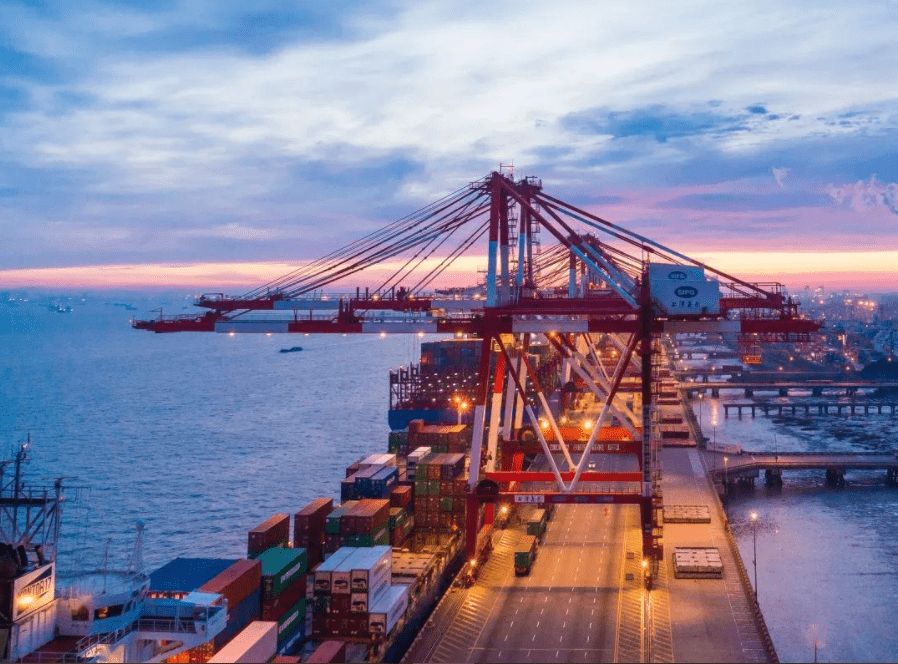
The measure is taken in order to alleviate the pressure on road transportation caused by the impacts of the epidemic, which led to phased lockdowns in the Shanghai municipality.
Under the service, customers can first transport containers to Taicang Service Center, and then transfer them by ship to Shanghai Port, and divert customers’ road transportation needs to waterways through “land to water” to ensure smooth logistics channels during the pandemic days.
Also, as the most important import and export area in Shanghai, the Pudong district has brought together important hubs like Pudong International Airport, Yangshan Port Area, and Waigaoqiao Port Area.
To keep the port area secured from the outbreak of coronavirus, the port group also launched the electronic epidemic prevention pass for truck drivers entering the area to unload and load boxes there.
The platform generates electronic epidemic prevention passes for drivers to use on their mobile phones by connecting the nucleic acid detection data and sends code information of the big data center combined with the business information of electronic equipment handover orders, which significantly improves the logistics turnover efficiency of container vehicles.
Since 28 March, Shanghai has implemented the nucleic acid screening in batches with the Huangpu River as the boundary.
The Shanghai Maritime Safety Administration also strictly implemented epidemic prevention and control measures, keeps a close eye on the safety line of defense, implemented unitised management, and strictly implemented the 24-hour shift system for leaders and key positions.
Under the full protection of the Shanghai Maritime Safety Administration, the flow of ships in key waters like Shanghai Port, Huangpu River, Shanghai section of the Yangtze River, and the mouth of the Yangtze River has remained stable during the pandemic days.
On the other hand, in terms of public transportation-- the operation of buses, subways, ferries, taxis, and online car-hailing has been suspended in the closed area of Shanghai.
Source: Container News
Related News

10/06
2026
The update of the Wan Hai Bunker Surcharge (WBS) for Q3/2026 by Wan Hai Lines (WHL) aims to proactively manage operational costs amidst the continuous fluctuations in global oil prices, while complying with stringent clean fuel standards in international maritime transport. This periodic adjustment helps ensure the maintenance of service quality and the stability of shipping routes departing from key southern port clusters (Ho Chi Minh City, Dong Nai, Ba Ria - Vung Tau) to global markets.

05/05
2026
The revised surcharge will take effect from June 1, 2026 (based on gate-in date) and will remain applicable until further notice.

25/03
2026
The global aviation industry is facing a new wave of disruption as ongoing tensions in the Middle East continue to put pressure on jet fuel costs, flight operations, and the overall stability of international air networks. The impact is no longer limited to routes passing directly through conflict-affected areas. Instead, it is now spreading across multiple markets, driving higher airfares while also increasing the risk of flight delays and cancellations on a broader scale.