



Maersk Reports Stellar Revenue For Q2 2021
A.P. Møller – Mærsk A/S (APMM) reports an unaudited revenue of USD 14.2bn, an underlying EBITDA of USD 5.1bn and an underlying EBIT of USD 4.1bn for Q2 2021. The strong quarterly performance is mainly driven by the continuation of the exceptional market situation with strong rebound in demand causing bottlenecks in the supply chains and equipment shortage. Volumes in Ocean increased by 15% and average freight rates improved 59% in Q2 2021 compared to previous year.
Consequently, given the strong result in Q2 2021 and the exceptional market situation still expected to continue at least until the end of the full-year 2021, the full year guidance for 2021 has been revised upwards with an underlying EBITDA now expected in the range of USD 18-19.5bn (previously USD 13-15bn) and underlying EBIT expected in the range of USD 14-15.5bn (previously USD 9-11bn).
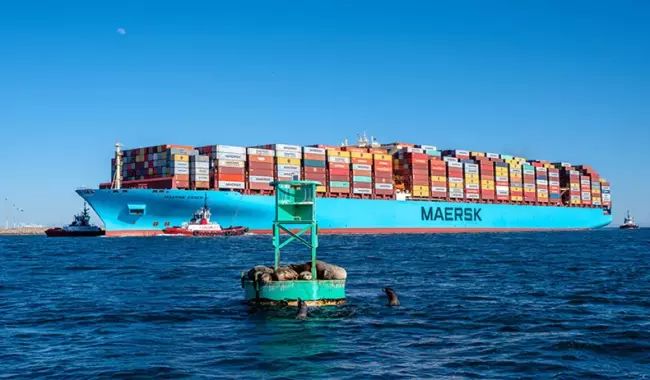
Representation Image – Credits: maersk.com
As a consequence of the higher earnings expectations, and despite increasing net working capital and higher instalments related to higher charter lease liabilities, the free cash flow (FCF) for the full-year 2021 is now expected to be minimum USD 11.5bn (previously minimum USD 7bn), while the cumulative CAPEX guidance for 2021-22 is unchanged of around USD 7bn.
The outlook for the global market demand growth for the full-year 2021 has been revised up to 6-8% from previously 5-7%, primarily still driven by the export volumes out of China to the US.
Earnings in the third quarter are expected to exceed the level for Q2 2021. Trading conditions for the quarters ahead are, however, still subject to a higher than normal volatility due to the temporary nature of current demand patterns, disruptions in the supply chains and equipment shortages.
APMM will publish its Q2 interim result on 6 August 2021.
Press Release
Related News

10/06
2026
The update of the Wan Hai Bunker Surcharge (WBS) for Q3/2026 by Wan Hai Lines (WHL) aims to proactively manage operational costs amidst the continuous fluctuations in global oil prices, while complying with stringent clean fuel standards in international maritime transport. This periodic adjustment helps ensure the maintenance of service quality and the stability of shipping routes departing from key southern port clusters (Ho Chi Minh City, Dong Nai, Ba Ria - Vung Tau) to global markets.

05/05
2026
The revised surcharge will take effect from June 1, 2026 (based on gate-in date) and will remain applicable until further notice.

25/03
2026
The global aviation industry is facing a new wave of disruption as ongoing tensions in the Middle East continue to put pressure on jet fuel costs, flight operations, and the overall stability of international air networks. The impact is no longer limited to routes passing directly through conflict-affected areas. Instead, it is now spreading across multiple markets, driving higher airfares while also increasing the risk of flight delays and cancellations on a broader scale.