



Port congestion clears in Chittagong
Although most of the regional and transshipment ports are facing acute congestions, the Chittagong port is now free of vessel crowed.
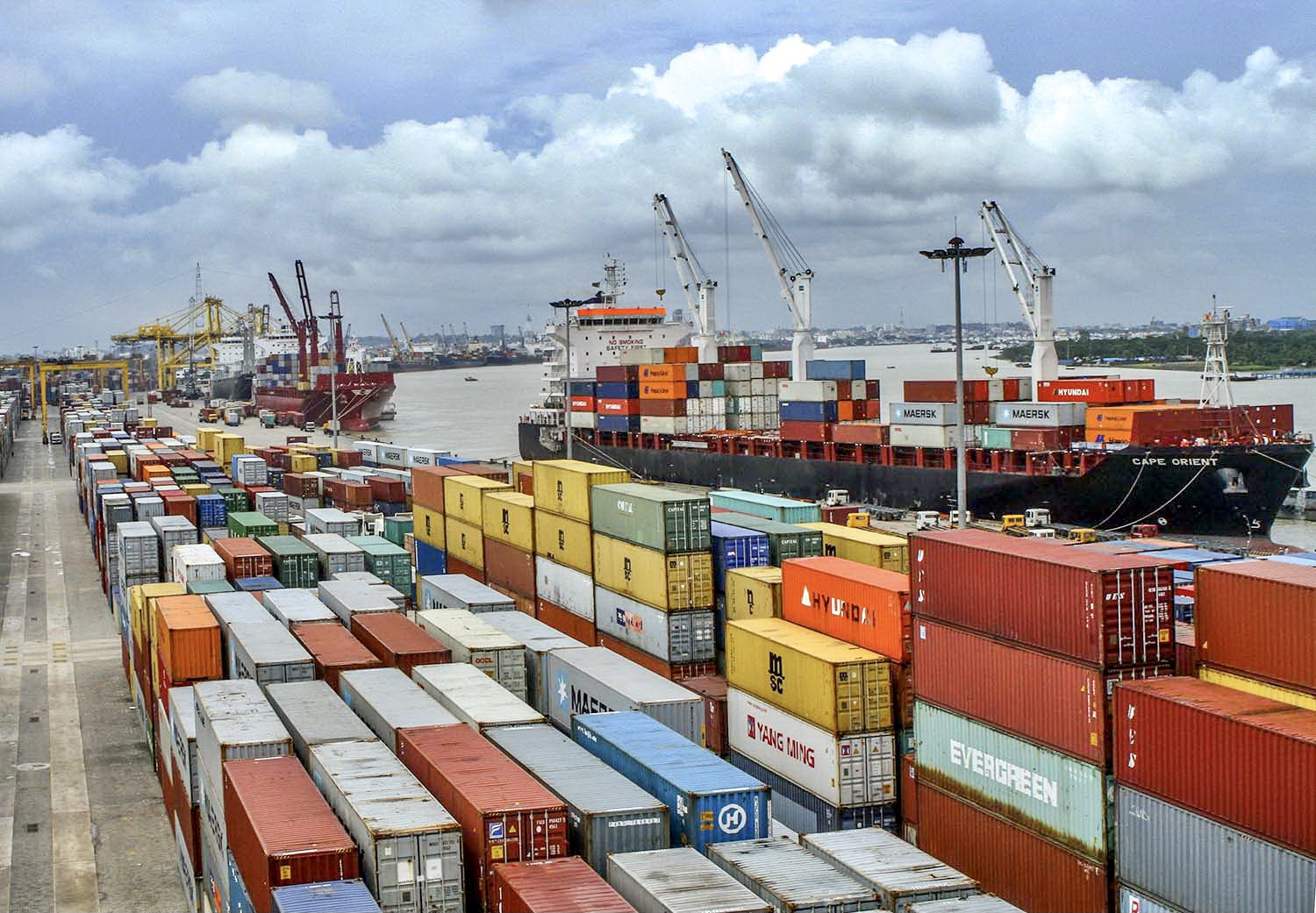
Container vessels coming to Bangladesh’s prime seaport are getting direct berthing to the jetties without waiting at the outer anchorage.
Sometimes a few vessels need to wait for a few hours for tide to get berthing due to drought requirements. Presently, in Chittagong port vessels with 9.5 meter water draft can take berth with tidal help.
On 12 August, only four container vessels were found to wait at the outer anchorage of the port. In particular, Hermann Schepers and Marine Taraba were waiting one day while Sabre Trader and SOL Delta were waiting a few hours.
Chittagong port officials say the waiting time of container vessels has now gone down to less than 24 hours or a maximum of one day, as an increased number of such ships are given berthing responding to shippers' calls.
The berthing delay for vessels went up to six to ten days last month which was linked to container stockpile at port yards, longer stay of vessels at jetties and priority berthing of Chittagong-Colombo vessels to clear export backlog.
Mohammed Abdullah Jahir, chief operating officer of Saif Maritime, said the port authority had been giving berthing of at least 12 container vessels at a time during the last couple of weeks which helped lower the vessels queue.
Besides, the provision of shifting all kinds of containers to the off docks has helped to free spaces at the port yard thus unloading and loading of boxes accelerated lowering the turnaround time of vessels, according to Jahir.
On 12 August, there were 35,419TEU at the port yard out of its total storage capacity of 49,018 TEU.
Source: Container News
Related News

10/06
2026
The update of the Wan Hai Bunker Surcharge (WBS) for Q3/2026 by Wan Hai Lines (WHL) aims to proactively manage operational costs amidst the continuous fluctuations in global oil prices, while complying with stringent clean fuel standards in international maritime transport. This periodic adjustment helps ensure the maintenance of service quality and the stability of shipping routes departing from key southern port clusters (Ho Chi Minh City, Dong Nai, Ba Ria - Vung Tau) to global markets.

05/05
2026
The revised surcharge will take effect from June 1, 2026 (based on gate-in date) and will remain applicable until further notice.

25/03
2026
The global aviation industry is facing a new wave of disruption as ongoing tensions in the Middle East continue to put pressure on jet fuel costs, flight operations, and the overall stability of international air networks. The impact is no longer limited to routes passing directly through conflict-affected areas. Instead, it is now spreading across multiple markets, driving higher airfares while also increasing the risk of flight delays and cancellations on a broader scale.