



Ports Of Long Beach & Los Angeles Keep ‘Container Dwell Fee’ On Hold Until Dec. 13
The Port of Long Beach and the Port of Los Angeles announced that consideration of the “Container Dwell Fee” would be held off another week, until Dec. 13.
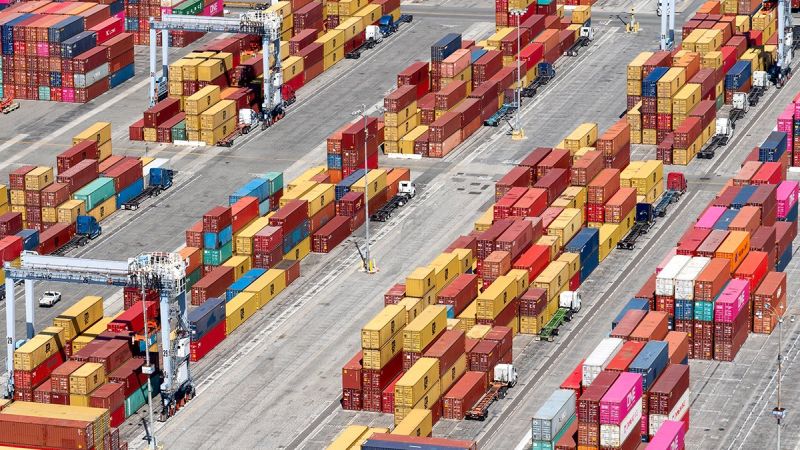
Since the fee was announced on Oct. 25, the twin ports have seen a combined decline of 37% in aging cargo on the docks. The executive directors of both ports will reassess fee implementation after another week of monitoring data.
Under the temporary policy approved Oct. 29 by the Harbor Commissions of both ports, ocean carriers can be charged for each import container that falls into one of two categories: In the case of containers scheduled to move by truck, ocean carriers could be charged for every container dwelling nine days or more.
For containers moving by rail, ocean carriers could be charged if a container has dwelled for six days or more. Currently, no date has been set to start the count with respect to container dwell time.
The ports plan to charge ocean carriers in these two categories $100 per container, increasing in $100 increments per container per day until the container leaves the terminal.
Before the pandemic-induced import surge began in mid-2020, on average, containers for local delivery remained on container terminals under four days, while containers destined for trains dwelled less than two days.
Any fees collected from dwelling cargo will be reinvested for programs designed to enhance efficiency, accelerate cargo velocity and address congestion impacts.
The policy was developed in coordination with the Biden-Harris Supply Chain Disruptions Task Force, U.S. Department of Transportation and multiple supply chain stakeholders.
Reference: polb.com
Related News

10/06
2026
The update of the Wan Hai Bunker Surcharge (WBS) for Q3/2026 by Wan Hai Lines (WHL) aims to proactively manage operational costs amidst the continuous fluctuations in global oil prices, while complying with stringent clean fuel standards in international maritime transport. This periodic adjustment helps ensure the maintenance of service quality and the stability of shipping routes departing from key southern port clusters (Ho Chi Minh City, Dong Nai, Ba Ria - Vung Tau) to global markets.

05/05
2026
The revised surcharge will take effect from June 1, 2026 (based on gate-in date) and will remain applicable until further notice.

25/03
2026
The global aviation industry is facing a new wave of disruption as ongoing tensions in the Middle East continue to put pressure on jet fuel costs, flight operations, and the overall stability of international air networks. The impact is no longer limited to routes passing directly through conflict-affected areas. Instead, it is now spreading across multiple markets, driving higher airfares while also increasing the risk of flight delays and cancellations on a broader scale.