



CNC ANNOUNCES EMERGENCY FUEL SURCHARGE (EFS) FOR INTRA-ASIA ROUTES
Amid the sharp rise in global fuel prices since early March 2026, driven by ongoing geopolitical tensions in the Near and Middle East, bunker costs across the ocean shipping industry have increased significantly on most trade lanes.
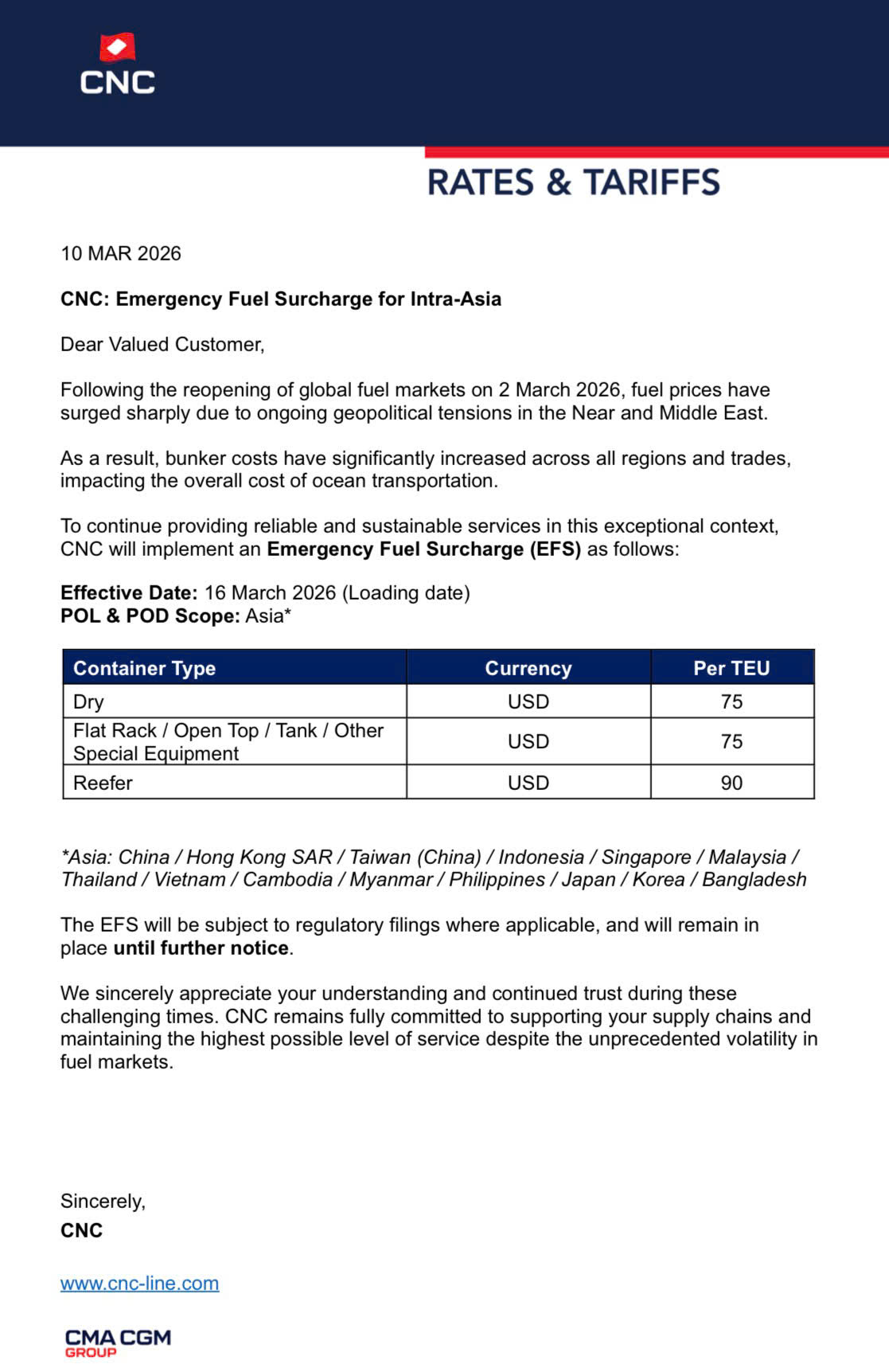
In response to this situation, CNC has announced the implementation of an Emergency Fuel Surcharge (EFS) for Intra-Asia routes.
According to CNC’s announcement, the EFS will range approximately from USD 75 – 90 per TEU, depending on container type and transportation conditions.
Implementation details:
• Effective date: From 16 March 2026 (based on loading date)
• Scope: Intra-Asia shipping routes
• Applicable POL/POD: China, Hong Kong, Taiwan, Indonesia, Singapore, Malaysia, Thailand, Vietnam, Cambodia, Myanmar, Philippines, Japan, Korea, and Bangladesh.
The surcharge will be applied in accordance with relevant regulatory requirements and will remain in effect until further notice from the carrier. As fuel costs continue to fluctuate, shipping lines are increasingly adjusting surcharges to ensure operational stability and maintain the reliability of regional supply chains.
Related News

10/06
2026
The update of the Wan Hai Bunker Surcharge (WBS) for Q3/2026 by Wan Hai Lines (WHL) aims to proactively manage operational costs amidst the continuous fluctuations in global oil prices, while complying with stringent clean fuel standards in international maritime transport. This periodic adjustment helps ensure the maintenance of service quality and the stability of shipping routes departing from key southern port clusters (Ho Chi Minh City, Dong Nai, Ba Ria - Vung Tau) to global markets.

05/05
2026
The revised surcharge will take effect from June 1, 2026 (based on gate-in date) and will remain applicable until further notice.

25/03
2026
The global aviation industry is facing a new wave of disruption as ongoing tensions in the Middle East continue to put pressure on jet fuel costs, flight operations, and the overall stability of international air networks. The impact is no longer limited to routes passing directly through conflict-affected areas. Instead, it is now spreading across multiple markets, driving higher airfares while also increasing the risk of flight delays and cancellations on a broader scale.