



MIDDLE EAST AIRSPACE UPDATE & AVIATION IMPACT FROM THE IRAN–ISRAEL CONFLICT
Escalating military tensions between Iran and Israel are causing severe disruptions to aviation operations across the Middle East. Several countries have been forced to close or restrict their airspace for security reasons, prompting airlines to suspend services, reroute flights, and cancel large numbers of departures.
At present, Iran and Israel have fully closed their airspace to civil aviation. Meanwhile, Iraq and Jordan have imposed partial restrictions, while Qatar and Bahrain have temporarily shut their civilian airspace. The UAE is also enforcing strict flight controls, resulting in multiple departures being suspended at Dubai and Abu Dhabi airports.
These developments have directly impacted major airlines. Within the region, Qatar Airways has suspended operations due to national airspace closure; Etihad Airways halted departures during multiple time windows; Emirates has delayed and canceled numerous flights tied to affected zones; and Kuwait Airways has temporarily suspended routes to Iran. Among international carriers, Air India and IndiGo have canceled multiple Middle East flights and rerouted long-haul services to Europe and North America to avoid high-risk airspace, while Lufthansa has suspended several routes to Dubai, Tel Aviv, Beirut, and Oman.
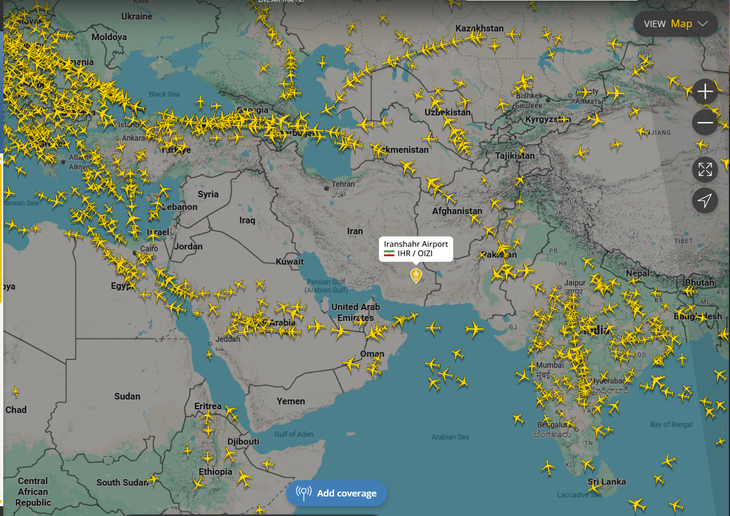
The situation is expected to cause significant air freight capacity shortages due to widespread flight cancellations and reduced frequencies. Transit times are also likely to increase as aircraft must operate longer, rerouted flight paths, driving up fuel consumption and pushing air cargo rates higher. In addition, shipments transiting through Middle East hub airports face a heightened risk of delays.
Under current conditions, importers and exporters are strongly advised to plan shipments well in advance, allow additional buffer time for delivery, and closely monitor airline updates to mitigate operational risks.
Related News

10/06
2026
The update of the Wan Hai Bunker Surcharge (WBS) for Q3/2026 by Wan Hai Lines (WHL) aims to proactively manage operational costs amidst the continuous fluctuations in global oil prices, while complying with stringent clean fuel standards in international maritime transport. This periodic adjustment helps ensure the maintenance of service quality and the stability of shipping routes departing from key southern port clusters (Ho Chi Minh City, Dong Nai, Ba Ria - Vung Tau) to global markets.

05/05
2026
The revised surcharge will take effect from June 1, 2026 (based on gate-in date) and will remain applicable until further notice.

25/03
2026
The global aviation industry is facing a new wave of disruption as ongoing tensions in the Middle East continue to put pressure on jet fuel costs, flight operations, and the overall stability of international air networks. The impact is no longer limited to routes passing directly through conflict-affected areas. Instead, it is now spreading across multiple markets, driving higher airfares while also increasing the risk of flight delays and cancellations on a broader scale.